
DevlogFeature2 min read
Towns you can walk into
Every town, village and fort on the atlas of Felucca is now built: streets laid out so you always see the fronts, squares with a landmark, markets, walls and gates where the roads arrive, and about 2600 buildings, each with its own rooms and yard.
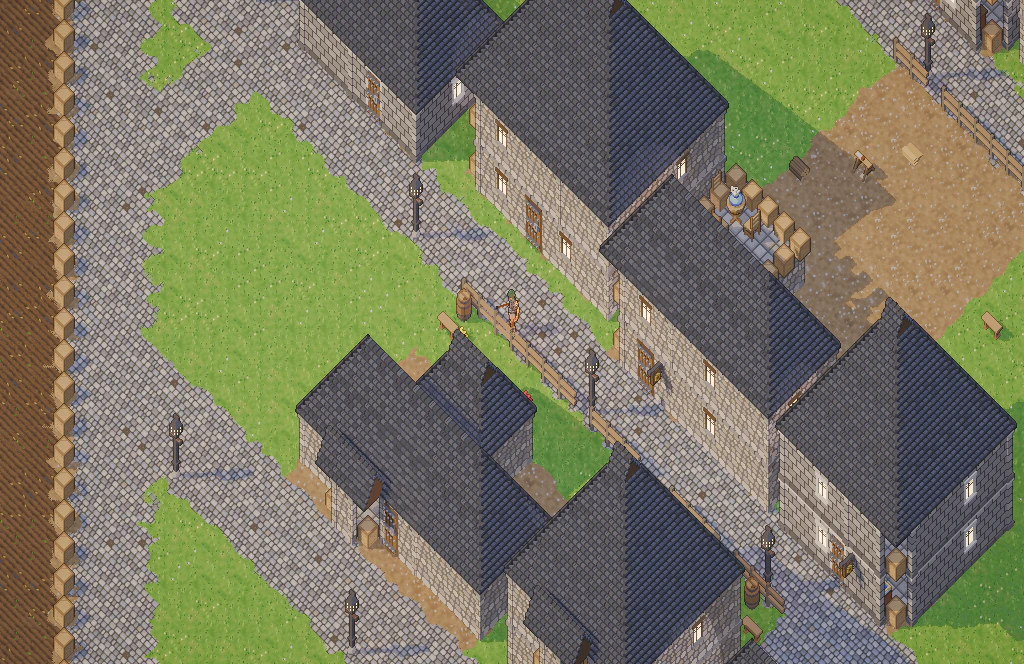
The atlas of Felucca has had its towns on it for a while: dots with names, roads between them. Now they are built. Every capital, city, town, village and fort has streets, a square, houses, shops, inns, temples and walls, and you can walk into all of them.
Laid out for this camera
Our camera looks north-west and never turns, so you always see the south and east sides of a building. A town is laid out for that, the way planned medieval towns were: rows of plots run east to west, and every row faces south onto its street. Walk down any street and the house fronts, doors and shop signs are on your side of it; the other side is the back gardens of the next row, so no tall back wall hides the street from you. Cross streets run north to south, and the house on the corner often faces east onto them.
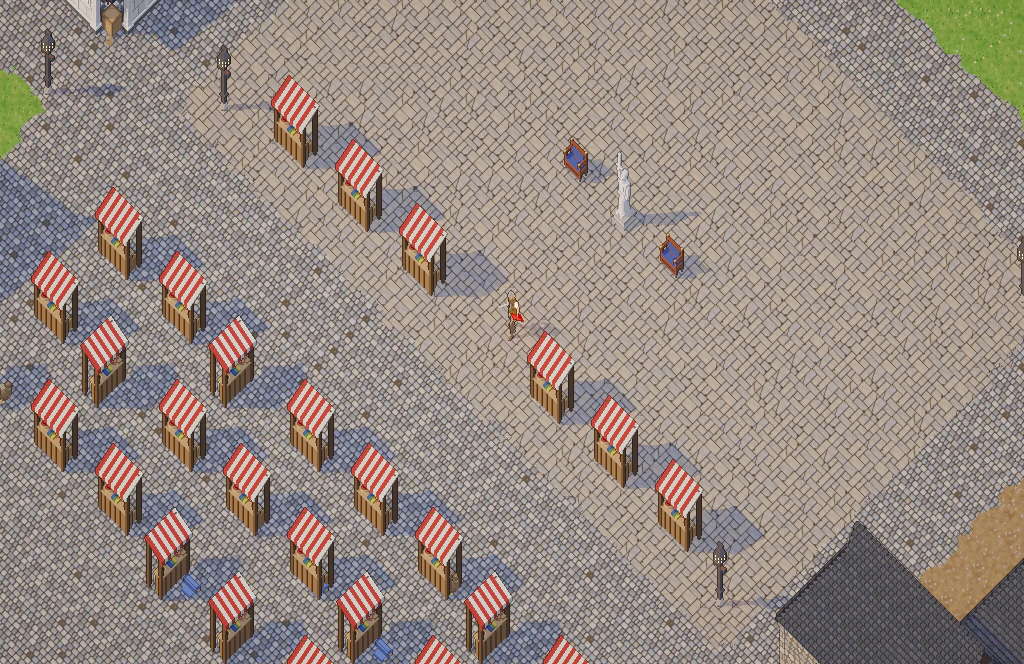
The square sits in the middle, with the town's landmark: a fountain, a well, a statue, a shrine, in the capital of Aelwyn a moongate. The best buildings face it from the north and the west. Its south side gets only low market stalls, so the square stays open to the camera. Capitals and cities have a market square full of stalls just below it.
What a town needs
Every plot belongs to a part of town, and the part decides what gets built: temples, banks and guildhalls around the square, manors in the rich quarter, inns, smithies and barracks by the gates, workshops and warehouses by the water, cottages and farmhouses at the edge. Every town also has a list of what it must have: a capital has its temple, bank, guildhall, inns, barracks, smithies and manors; a town at least a temple, an inn and a smithy.
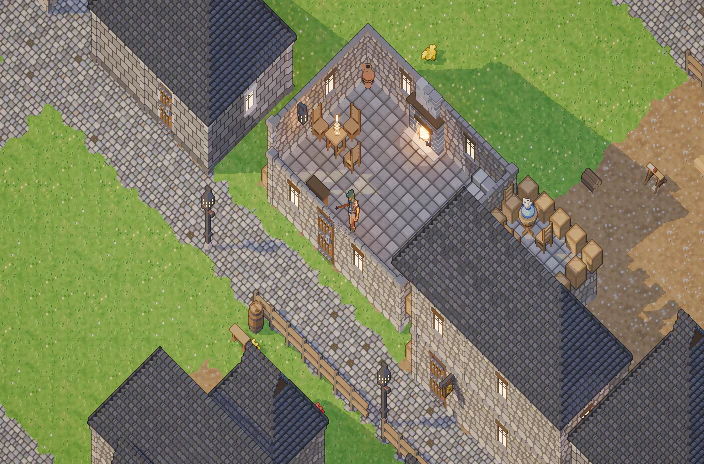
Behind every building is a yard that fits its trade: logs, ore and a water trough behind the smithy, hay and barrels in the inn's stable yard, crates behind the warehouse, training dummies behind the barracks, a vegetable patch behind a cottage, a graveyard behind the temple. Step inside and the roof and upper floor lift away, like they always did in UO.
Walls, gates and free plots
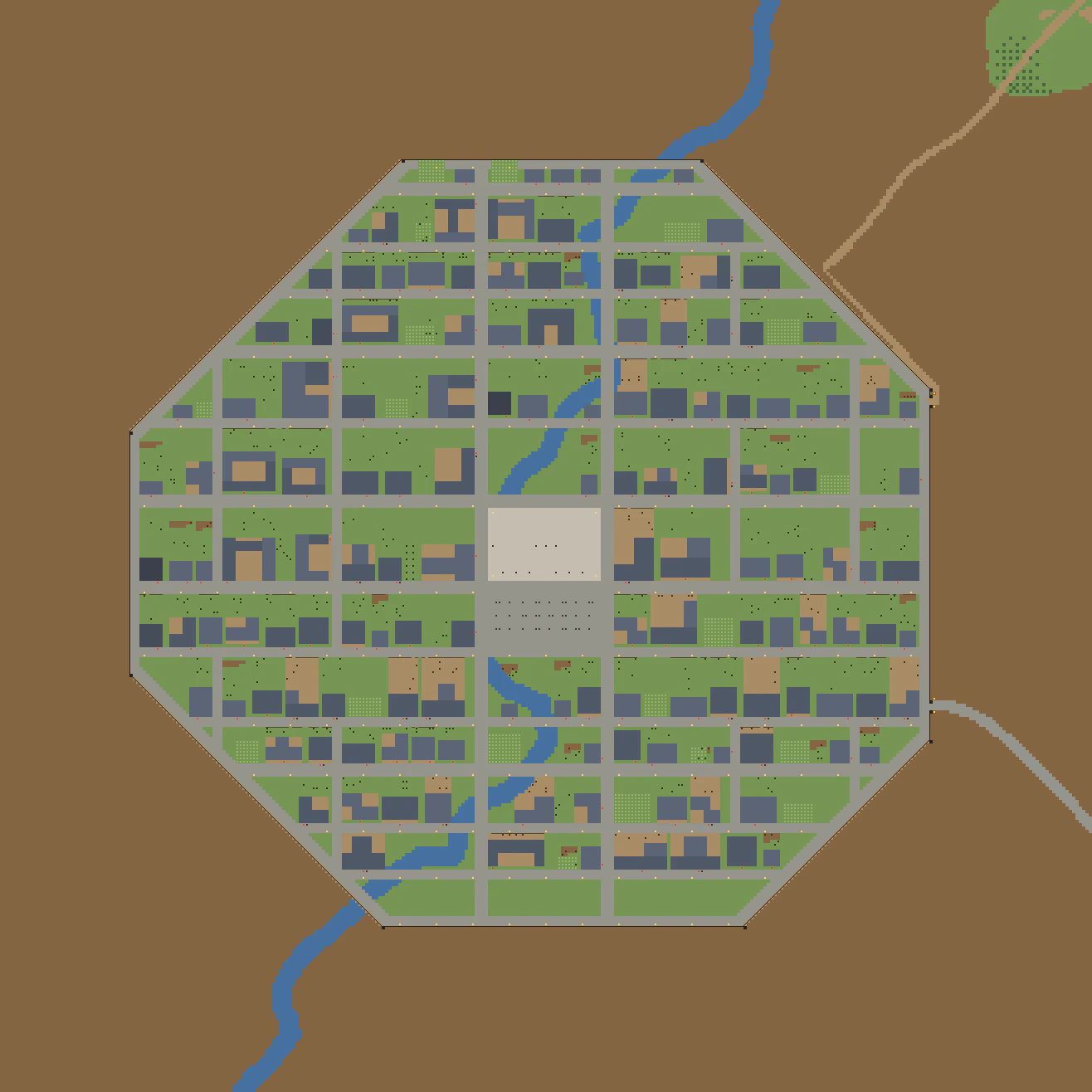
Walled towns get an eight-sided wall with crenellations (Aelwyn and the isles build palisades instead), a road running around the inside, and a gate wherever a road arrives. Forts are small walled camps with barracks, a tower and a parade ground.
Not every plot is taken. About one in ten in the capitals, and more in villages, is left empty on purpose: those are for you. Building your own house and raising your own town is what Felucca is about, and the towns now have room for it.
Not there yet
Upper floors are drawn but you can't climb the stairs yet. The diagonal wall pieces, battlements and arrow slits are still being modelled, so for now they show as placeholders. There are no castles, gatehouses, docks or bridges yet, and the towns are empty: townsfolk, guards and shopkeepers come later.
Comments
Join our Discord →Comments are the replies to this post’s thread in our Discord forum. They appear here a few seconds after they are posted.
The discussion thread opens on Discord shortly after a post goes live.