
DevlogFeature1 min read
Ground without the chessboard
Where swamp met sand, or forest met meadow, Felucca's ground used to break into a chessboard of diamonds. Now the kinds of ground meet along natural curves, and at the edge the higher one shows through.
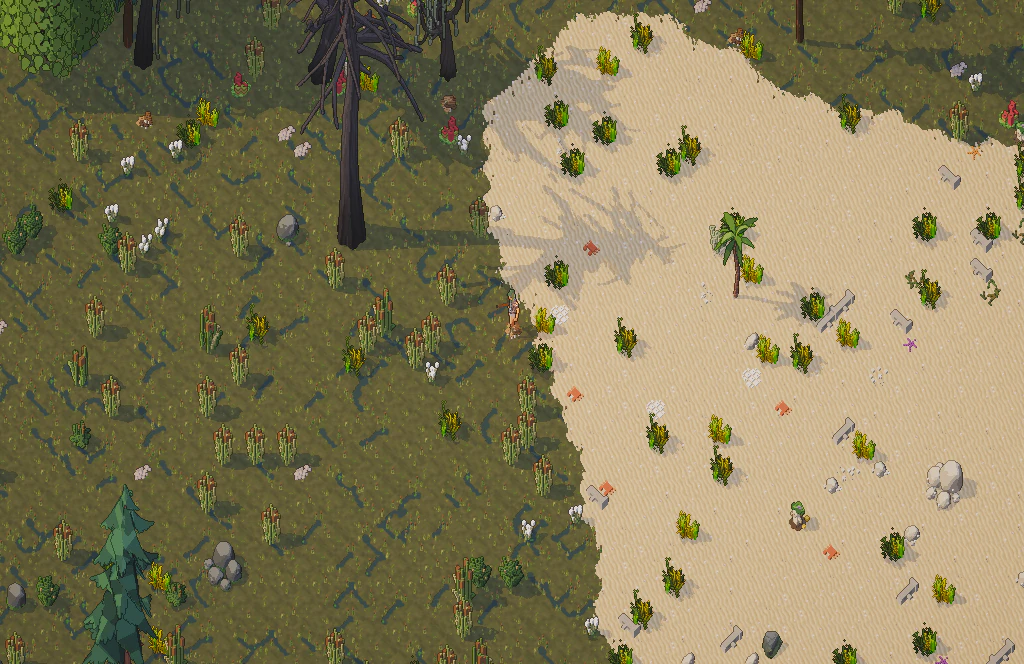
Walk to the edge of a swamp and the ground used to give itself away: the mud and the sand beside it broke up into a chessboard of little diamonds, one per tile. It came from two places at once. The map decided the ground of every tile with a regular pattern added on top, so near a border neighbouring tiles flipped back and forth; and the game drew each tile's border as a wobbly diamond.
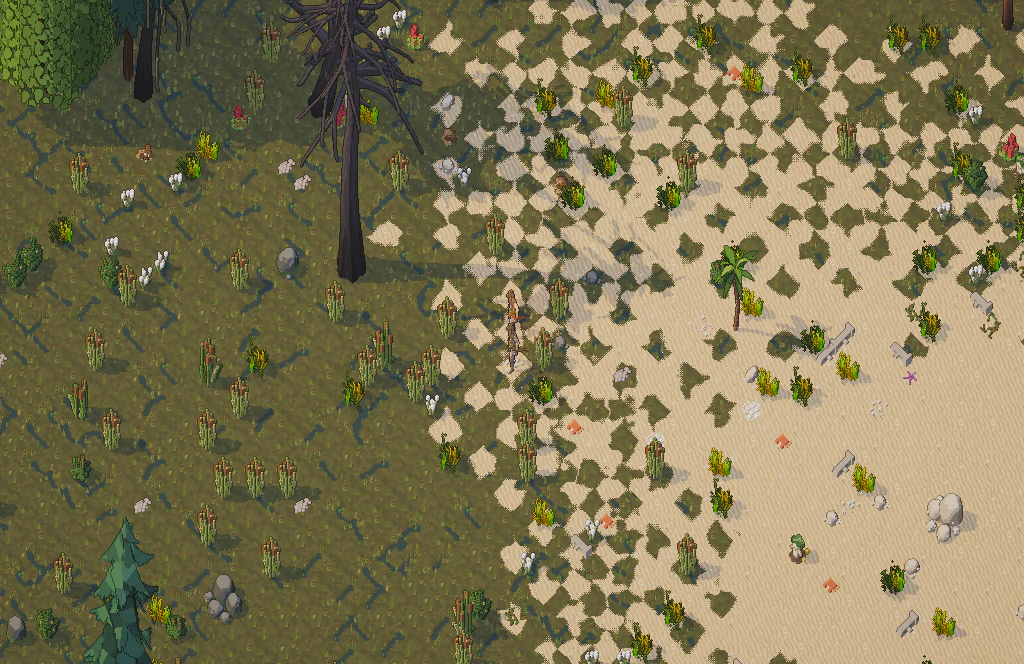
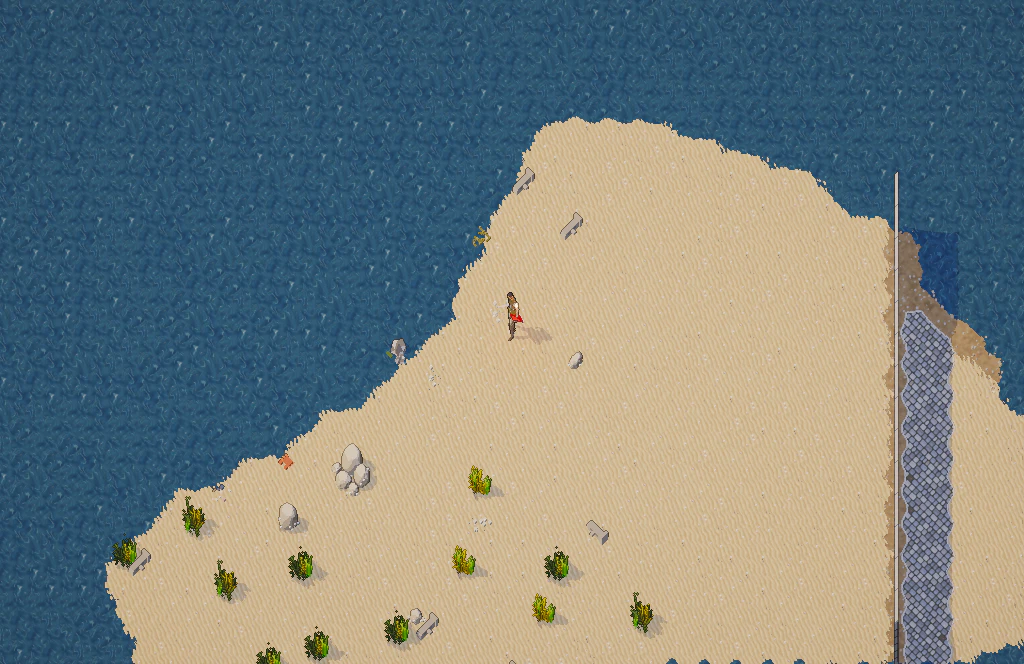
Both are fixed. The map now bends its borders with slow, swirling noise, so a swamp ends along one long, curving shore instead of a band of squares. And where two kinds of ground meet, the game looks at the shape of each one at every single pixel and lets the higher one win: the ripples of the sand reach into the mud, grass tufts stand over the furrows of a field, fallen leaves spill into a clearing and water settles into the low ground of a beach. It is still pixel art, every pixel either one ground or the other, never a blur.
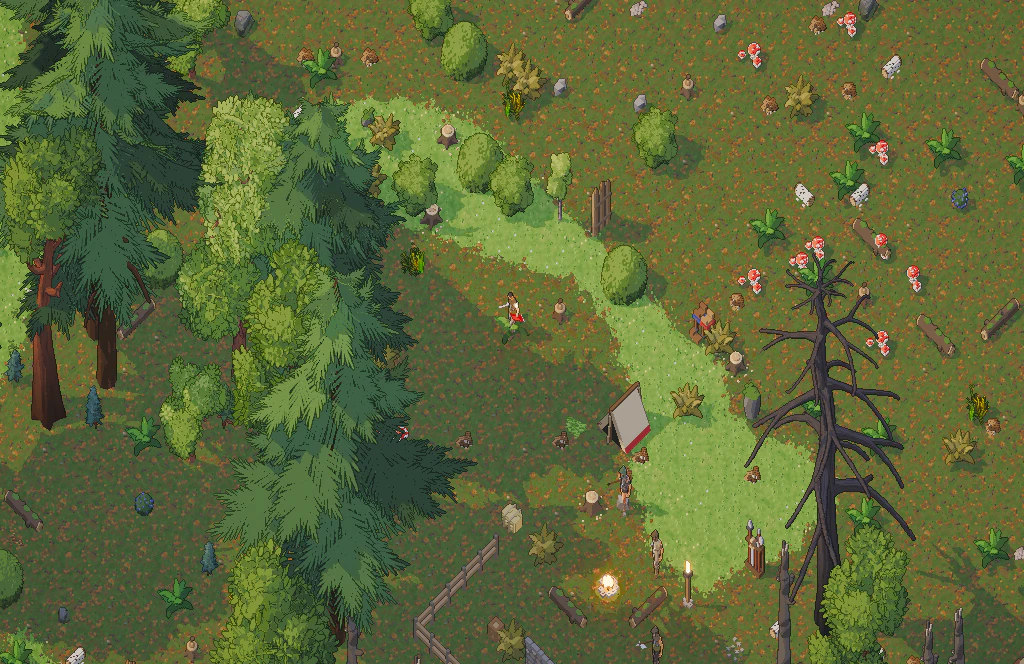
Streets keep their straight kerbs; only the ground beside them changed.
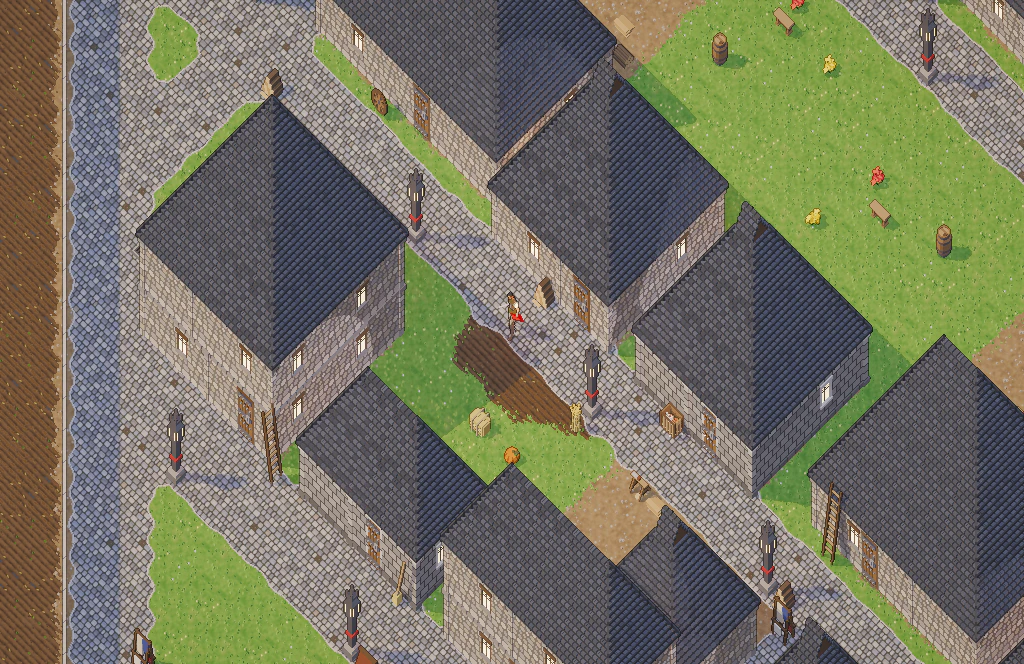
While we were at it, the canals got a repair. Their stone walls showed gaps filled with water colour, and along some quays the ground opened into small black holes. Both are gone: the walls run unbroken and the quays are paved right up to the edge.
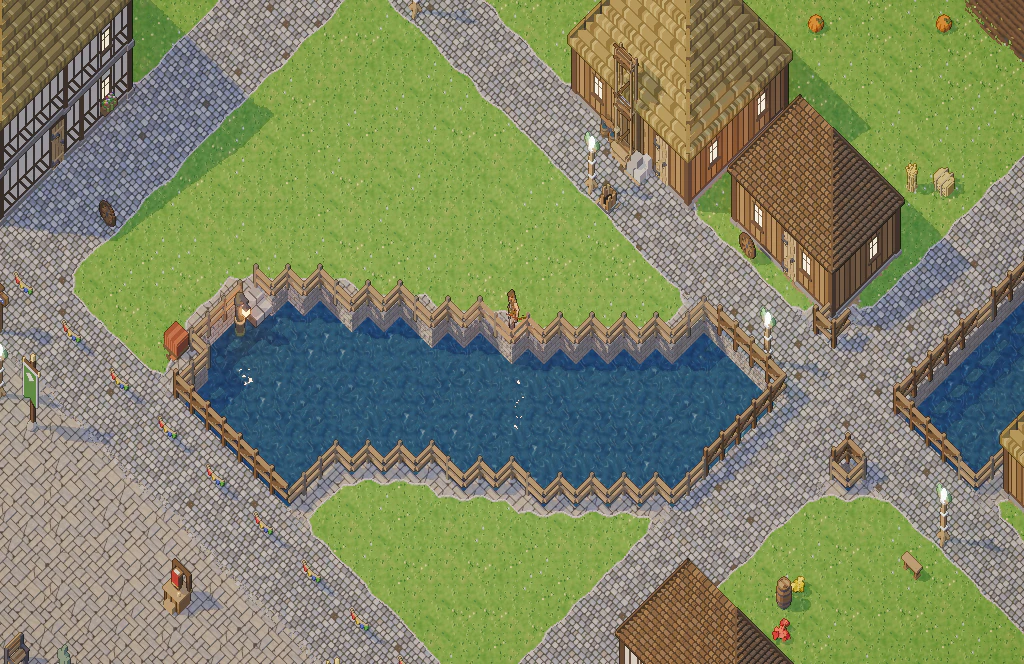
Every picture is the game itself. Next on the list: breaking up the repetition inside one kind of ground, so a big meadow stops showing its tiles, and slow changes of colour across the land: wetter and darker by the water, paler on hill tops, worn paths where people walk.
Comments
Join our Discord →Comments are the replies to this post’s thread in our Discord forum. They appear here a few seconds after they are posted.
The discussion thread opens on Discord shortly after a post goes live.